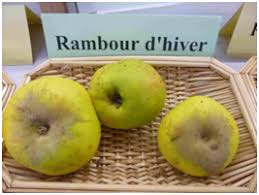
Apple tree - Winter rambour
Apple tree - Winter rambour
4 in stock
Couldn't load pickup availability
Winter Rambour Apple Tree (Malus domestica 'Winter Rambour')
A very old and hardy French variety, the Rambour d'hiver is a winter apple highly prized for its versatility and good storage qualities. A historic variety that has stood the test of time!
🍎 Fruit description
Large apple, flattened and irregularly shaped. The skin is smooth, thick, and greenish-yellow with red streaks on the side exposed to the sun. The flesh is white, tender, juicy, and slightly tart. It has a fine, melting texture when ripe. The flavor is sweet and refreshing with a pleasant hint of acidity.
🥧 Usage
An excellent cooking apple, ideal for compotes, tarts, fritters, and jellies thanks to its meltingly tender flesh. A good eating apple when first stored. Perfect for juice and sweet cider. Suitable for all culinary preparations.
📅 Harvest
October to November. Harvesting takes place when the fruit detaches easily from the tree. The harvest is generally abundant and regular.
🏺 Conservation
Keeps well for 3 to 5 months in a cool, well-ventilated cellar. Best consumed from November to March. The flesh becomes more tender with age.
🐝 Pollination
Self-sterile variety requiring a pollinator. Good pollinators: Reine des Reinettes, Belle de Boskoop, Jacques Lebel, Reinette Clochard. Mid-season to late flowering. Excellent productivity.
🛡️ Disease resistance
Good overall disease resistance. Moderate scab resistance. A very hardy and vigorous variety, well-suited to cool, damp climates. Tolerates poor soils and challenging exposures.
📖 History
A very old variety known in France since the 16th century. Widely cultivated in Europe until the 20th century. It is among the oldest cultivated apple varieties. A historic variety prized for its hardiness and exceptional productivity.
🌱 Cultivation characteristics
A tree with a spreading, upright habit. It bears fruit quickly and produces a very abundant and consistent crop. It adapts to all soil types, even poor ones. Prefers a sunny to partially shaded location. An easy-to-grow variety recommended for home orchards.